Call us now :07313725949
 Send Inquiry
 Send Inquiry
ESCR Apparatus
MOQ : 1 Unit
ESCR Apparatus Specification
- Control Type
- Digital Temperature Controller
- Accuracy
- 1C
- Heating Capacity
- 500 W Immersion Heater
- Display Type
- Digital Display
- Shape
- Rectangular
- Glass Type
- Borosilicate Glass
- Features
- Over-temperature protection, corrosion resistant, glass wool insulation, ergonomically designed cover, removable rack for test specimens
- Temperature Resistance
- Up to 100C
- Power Supply
- 230V AC, 50 Hz
- Usage
- Laboratory & Industrial
- Type
- Extraction Apparatus
- Dimension (L*W*H)
- 900 x 500 x 650 mm
- Product Type
- ESCR Apparatus
- Equipment Type
- ESCR Apparatus
- Equipment Materials
- Mild Steel Powder Coated Body
- Power
- 500 W
- Voltage
- As per required Volt (v)
- Application
- Environmental Stress Crack Resistance (ESCR) testing for plastics
- Warranty
- Yes
- Capacity (Ltr)
- 20 Litres
- Insulation
- Glass Wool Layer
- Inner Tank Material
- Stainless Steel 304
- Heater Type
- Removable Heater Assembly
- Compliance
- ASTM D1693
- Finish
- Chemical Resistant Paint
- Time Control
- Digital Timer up to 999 minutes
- Thermostat Type
- Capillary Thermostat
- Stirring
- Magnetic Stirrer Provided
- Test Sample Capacity
- 10 samples
- Outer Body
- Powder Coated Mild Steel
ESCR Apparatus Trade Information
- Minimum Order Quantity
- 1 Unit
- Payment Terms
- Cash Advance (CA), Cash in Advance (CID), Letter of Credit at Sight (Sight L/C), Telegraphic Transfer (T/T), Letter of Credit (L/C)
- Supply Ability
- 2 Units Per Month
- Delivery Time
- 6 Week
- Main Export Market(s)
- Asia, Australia, Central America, North America, South America, Eastern Europe, Western Europe, Middle East, Africa
- Main Domestic Market
- All India
About ESCR Apparatus
The Environmental Stress Crack Resistance (ESCR) Tester is an important tool in the plastic industry for evaluating the resistance of plastic materials to cracking under the influence of various environmental stresses.Exceptional Thermal Precision and Control
Operating with a capillary thermostat and a digital temperature controller, the ESCR Apparatus achieves and maintains temperatures up to 100C with an accuracy of 1C. Its advanced heating system, combined with over-temperature protection and a powerful 500 W immersion heater, ensures stable and repeatable test conditions for all ESCR assessments.
Robust Construction for Industrial Demands
Crafted with a stainless steel 304 inner tank and a powder-coated mild steel exterior, the ESCR Apparatus offers exceptional durability and chemical resistance. The glass wool insulation not only conserves energy but also enhances operator safety by ensuring the outer surface remains at a safe temperature during use.
Efficient and User-Friendly Operation
Capable of handling 10 samples at once, this apparatus streamlines the ESCR test process. The digital timer, digital display, removable specimen rack, and ergonomic cover design simplify operation and monitoring, whether in a research laboratory or a production facility.
FAQs of ESCR Apparatus:
Q: How does the ESCR Apparatus facilitate Environmental Stress Crack Resistance testing in plastics?
A: The ESCR Apparatus enables testing by providing precise, controlled environmental conditions. With its stainless steel tank, digital temperature control, and timer, it allows accurate simulation of stress and exposure, ensuring plastics are tested according to ASTM D1693 standards for crack resistance.Q: What are the main features that enhance durability and safety in this apparatus?
A: Key features include a corrosion-resistant stainless steel 304 inner tank, powder-coated mild steel body, borosilicate glass components, and glass wool insulation. Over-temperature protection and a removable heater boost operator safety and long-term equipment reliability.Q: When should ESCR testing be performed using this apparatus?
A: ESCR testing should be conducted during product development, quality assurance, or when compliance with industry standards (such as ASTM D1693) is required. Its essential for verifying the resistance of plastic materials to stress cracking under environmental conditions.Q: Where is this equipment typically used and installed?
A: This ESCR Apparatus is primarily used in laboratories and industrial settings involved in material testing, research, and quality control. Its robust design makes it suitable for installation in research institutions and manufacturing facilities handling plastic products.Q: What is the process of using the ESCR Apparatus for testing?
A: Users prepare up to 10 plastic test samples and place them in the removable rack inside the 20-litre tank. The digital controller is set for the required temperature (up to 100C), timer adjusted (up to 999 minutes), and the apparatus is started. A magnetic stirrer ensures even temperature distribution, and the test proceeds under controlled conditions.Q: How does the apparatus benefit laboratory and industrial operations?
A: With high sample capacity, excellent thermal accuracy, and robust construction, this apparatus accelerates testing processes and delivers reliable, repeatable results. Its user-oriented features reduce manual intervention, minimize errors, and ensure compliance with international standards.Q: What support and warranty options come with the ESCR Apparatus?
A: The equipment is supplied with warranty coverage, ensuring prompt support for any manufacturing defects or operational issues, contributing to long-term reliability and user confidence in demanding testing environments.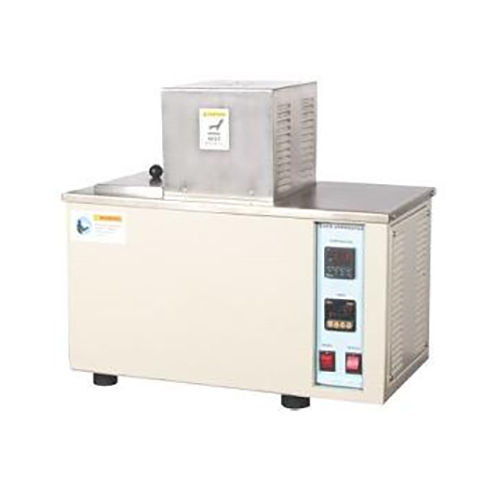
Tell us about your requirement

Price:
Quantity
Select Unit
- 50
- 100
- 200
- 250
- 500
- 1000+
Additional detail
Mobile number
Email


 Send Inquiry
Our Products
- Testing Machines
- Metallography Machines
- Mooney Viscometer
- Metallurgical Microscope
- Metallography Kit
- Garnet Sand
- Heat Treatment Furnace
- Submersible Agitator
- Escr Apparatus
- Oscillating Disc Rheometer
- Universal Testing Machines
- Hardness Testing Machine
- Rubber And Plastic Testing Equipment
- Laboratory Equipments
- Impact Testing Machine
- Moving Die Rheometer
- Coating Thickness Gauge
- Hot Air Oven
- Industrial Agitator
- Industrial Furnace
- Cast Iron Mould
- Hardenability Set Up
- Digital Brinell Microscope
- Humidity Chamber
- Grinding Polishing Machine
- Rebar Detection Meter
- Industrial Moulds


No Flat No. 4, Vidiansu Villa, Plot No. 73, Sangam Nagar Society, Pune Satara Road, Pune - 411037, Maharashtra, India

Mr Mahesh Deshpande
(Director)
Mobile :07313725949
 Send Inquiry
 Send SMS
 Call Me Free
Developed and Managed by Infocom Network Private Limited.
