Call us now :07313725949
 Send Inquiry
 Send Inquiry
Lab Mooney Viscometer
MOQ : 1 Unit
Lab Mooney Viscometer Specification
- Display Type
- Digital LCD/LED
- Temperature Resistance
- Up to 250C
- Glass Type
- Toughened glass observation window
- Speed Range
- 2 0.02 rpm
- Control Type
- Digital Microprocessor-based control
- Shape
- Rectangular/bench-top
- Features
- Over-temperature protection, digital timer, programmable test cycles
- Accuracy
- 0.1 Mooney unit
- Heating Capacity
- 500 W
- Power Supply
- 220V AC
- Usage
- Laboratory & Industrial
- Type
- Lab Mooney Viscometer
- Dimension (L*W*H)
- 600 x 400 x 600 mm
- Product Type
- Mooney Viscometer
- Equipment Materials
- Mild steel body with powder coated finish
- Power
- 220-240V, 50Hz, Single Phase
- Voltage
- As per required Volt (v)
- Material
- Mild steel
- Application
- Laboratory & Industrial use for viscosity and scorch testing of rubber
- Warranty
- Yes
- Test Standards
- ASTM D1646, ISO 289
- Sample Volume
- Standard rubber compound discs
- Humidity Range
- Up to 85% RH
- Operation Mode
- Semi-automatic
- Data Output
- USB/RS232 interface for data logging
- Color
- Blue & white
- Weight
- 70 kg approx
- Ambient Temperature Range
- 10C to 40C
- Additional Product Specifications
- Safety
- Motor overload protection, safety interlock
- Timer Range
- 0-99 minutes
- Test Chamber
- Uniform heating aluminum die-cast
- Equipment Type
- Mooney Viscometer
- Test Rotor
- Standard ASTM/ISO-compliant
Lab Mooney Viscometer Trade Information
- Minimum Order Quantity
- 1 Unit
- Payment Terms
- Cash Advance (CA), Cash in Advance (CID), Letter of Credit at Sight (Sight L/C), Telegraphic Transfer (T/T)
- Supply Ability
- 2 Units Per Month
- Delivery Time
- 6 Week
- Main Export Market(s)
- Asia, Australia, Central America, North America, South America, Eastern Europe, Western Europe, Middle East, Africa
- Main Domestic Market
- All India
About Lab Mooney Viscometer
MOONEY VISCOSITY
It is a measure of the viscosity of a rubber or compound determined in a Mooney shearing disk viscometer. It is indicated by the torque required to rotate the disk embedded in a rubber/compound specimen and enclosed in the die cavity under specified conditions.
Viscosity of rubber or compound plays vital role in deciding its processing behaviour. In Rubber Industry rubber or compound have to undergo
MOONEY VISCOMETER
various processing before it can be vulcanized into its final form. Deviation in viscosity of the compound will critically alter its processibility specially in terms of calendering, extruding or injection moulding. It is necessary that viscosity parameter be maintained within specified limits.
To do this Mooney Viscometer is of vital importance. In fact viscometer has manifold advantages.
Superior Performance for Rubber Testing
Built to handle standard rubber compound discs, the Lab Mooney Viscometer adheres strictly to ASTM D1646 and ISO 289 standards. Its advanced heating system and precise digital controls guarantee reliable and repeatable testing resultsan essential requirement for laboratories and manufacturers aiming for consistent product quality. The toughened glass observation window and digital LCD/LED interface make sample monitoring effortless.
Flexible and User-Centric Design
This viscometer combines robust construction with thoughtful ergonomics, including a rectangular, benchtop shape to optimize workspace efficiency. It boasts a programmable digital timer (0-99 minutes), ambient and humidity adaptability, and a generous operational temperature range up to 250C. Data can be exported via USB or RS232, streamlining integration into laboratory and industrial workflows.
Built-In Safety and Durability
The Lab Mooney Viscometer offers advanced safety mechanisms, such as motor overload protection, over-temperature protection, and a safety interlock system. Crafted from mild steel with a powder-coated finish, it is designed to withstand the rigors of daily lab and industrial use. The product is supported by a warranty, ensuring long-term dependability and satisfaction for users.
FAQs of Lab Mooney Viscometer:
Q: How do I operate the Lab Mooney Viscometer for viscosity testing?
A: Begin by preparing a standard rubber compound disc and loading it into the uniform heating aluminum die-cast test chamber. Set your required test parameters, such as temperature, time, and speed, using the digital microprocessor-based control panel. Initiate the test cycle; data and results will be displayed on the LCD/LED screen and can be exported for analysis.Q: What materials and sample formats are suitable for this viscometer?
A: This equipment is specifically designed for standard rubber compound discs. The robust construction, including a toughened glass observation window and mild steel body, enables reliable testing for laboratory and industrial rubber applications according to ASTM D1646 and ISO 289 standards.Q: When should the safety features of the Lab Mooney Viscometer be engaged?
A: The integrated safety mechanismssuch as motor overload protection and safety interlockare activated automatically during operation. Users are advised to ensure all safety checks are complete before testing, particularly when operating within the upper temperature range or conducting extended tests.Q: Where can I access test data from the viscometer?
A: Test data can be accessed directly from the digital LCD/LED display during operation. For extended analysis or record-keeping, results can be exported via USB or RS232 interface to an external computer or data logger.Q: What is the process for calibrating the device?
A: Calibration is performed according to standard laboratory procedures, in alignment with ASTM D1646 and ISO 289 guidelines. It is recommended to use certified calibration materials and follow the step-by-step instructions provided in the user manual for optimal accuracy.Q: How does the viscometer benefit rubber testing in industrial settings?
A: The Lab Mooney Viscometer delivers precise, repeatable measurements of viscosity and scorch characteristics, aiding in quality control and formulation development. Its programmable cycles, digital controls, and compliance with international standards make it a valuable tool for ensuring product consistency and performance.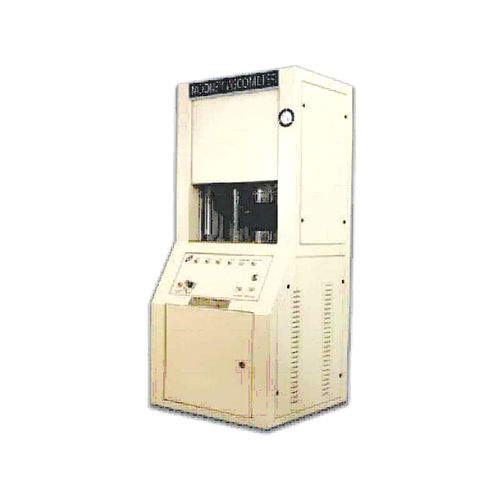
Tell us about your requirement

Price:
Quantity
Select Unit
- 50
- 100
- 200
- 250
- 500
- 1000+
Additional detail
Mobile number
Email


 Send Inquiry
Our Products
- Testing Machines
- Metallography Machines
- Mooney Viscometer
- Metallurgical Microscope
- Metallography Kit
- Garnet Sand
- Heat Treatment Furnace
- Submersible Agitator
- Escr Apparatus
- Oscillating Disc Rheometer
- Universal Testing Machines
- Hardness Testing Machine
- Rubber And Plastic Testing Equipment
- Laboratory Equipments
- Impact Testing Machine
- Moving Die Rheometer
- Coating Thickness Gauge
- Hot Air Oven
- Industrial Agitator
- Industrial Furnace
- Cast Iron Mould
- Hardenability Set Up
- Digital Brinell Microscope
- Humidity Chamber
- Grinding Polishing Machine
- Rebar Detection Meter
- Industrial Moulds


No Flat No. 4, Vidiansu Villa, Plot No. 73, Sangam Nagar Society, Pune Satara Road, Pune - 411037, Maharashtra, India

Mr Mahesh Deshpande
(Director)
Mobile :07313725949
 Send Inquiry
 Send SMS
Developed and Managed by Infocom Network Private Limited.
