Call us now :07313725949
 Send Inquiry
 Send Inquiry
Hardness Testing Machine
MOQ : 1 Unit
Hardness Testing Machine Specification
- Number of Specimens
- 1
- Product Type
- Hardness Tester
- Specimen Size
- 2 mm 70 mm
- Resolution
- 0.1 HR
- Hardness
- Rockwell, Brinell Scale
- Measuring Range
- 20 100 HRC
- Humidity
- 85% RH
- Accuracy
- 1.0%
- Response Time
- 1 s
- Gas Pressure
- 0.4-0.7 MPa
- Display Type
- Digital Display
- Interface Type
- USB
- Port Size
- 3/8 inch
- Usage
- Laboratory & Industrial
- Temperature
- 10C - 35C
- Operating Voltage
- As per required
- Automation Grade
- Semi-Automatic
- Max Height
- 200 mm
- Frequency
- 50/60 Hz
- Mounting Type
- Bench-top
- Application
- Laboratory & Industrial
- Features
- Semi-Automatic Operation, Easy Calibration
- Operate Method
- Semi-Automatic
- Voltage
- As per required Volt (v)
- Test Range
- 20 100 HRB
- Power Supply
- Electric
- Capacity
- 1000 kgf
- Machine Weight
- 65 kg
- Test Speed
- 0.05 0.5 mm/sec
- Test Width
- 150 mm
- Test Stroke
- 100 mm
- Control Mode
- Digital
- Additional Product Specifications
- Memory Function
- Test result storage
- Construction Material
- Cast Iron Body
- Equipment Type
- Hardness Testing Machine
- Safety Features
- Overload Protection, Emergency Stop
- Test Indenter
- Diamond and Ball Indenter
- Included Accessories
- Standard Test Blocks, Flat Anvil, Vee Anvil
- Finish
- Powder Coated
- Scale Selection
- Manual/Automatic
- Calibration
- Supplied with Calibration Certificate
Hardness Testing Machine Trade Information
- Minimum Order Quantity
- 1 Unit
- Payment Terms
- Cash Advance (CA), Cash in Advance (CID), Letter of Credit at Sight (Sight L/C), Telegraphic Transfer (T/T)
- Supply Ability
- 2 Units Per Month
- Delivery Time
- 8 Week
- Main Export Market(s)
- Asia, Australia, Central America, North America, South America, Eastern Europe, Western Europe, Middle East, Africa
- Main Domestic Market
- All India
About Hardness Testing Machine
Available in Built in Microscope Manual ReadingComputerised Auto /Manual Reading
- The machine has a robust,C-type load frame & has been designed for production testing of cast or forged components like leaf springs, cam shafts, etc. for Brinell hardness value. This machine is suitable for foundries, engineering industry on production line.
- Since most of the operations are fast and automatic, the test speed is high with less operator fatigue.
- The cycle time (except loading / unloading) is about 12 seconds per test.
- Load stages 250 kgf and 3000 kgf.
- Optical measuring equipment with 14 X magnification.
- Job loading / unloading, push button operation, pushing cycle start, de-clamp buttons are only manual operations & rest all is automatic.
- A push button is pressed for cycle start & hydraulic operations. After cycle time, impression is visible on screen, which (Diameter) is to be measured with the help of microscope of least count 0.01mm.
- Computerized model is available .Computerized model has built in CCD and suitable advanced software. Hardness will be displayed On computer monitor automatically. Results printout can be taken.
- Accuracy conforming to IS: 2281.
Advanced Testing Technology
Our Hardness Testing Machine incorporates cutting-edge digital control for high accuracy and reliability in both laboratory and industrial settings. The devices semi-automatic operation ensures ease-of-use, while a rapid response time and user-friendly digital display streamline the testing process. Its robust cast iron construction guarantees durability even with regular, intensive use.
Versatile Applications and High Precision
Designed to handle a wide range of specimen sizes (2 mm 70 mm), this equipment is suitable for diverse tasks in research laboratories and industrial production lines. The machine offers exceptional measurement accuracy (1.0%%) across Rockwell and Brinell scalesmaking it suitable for quality assurance, product development, and routine material testing in various industries.
Comprehensive Safety and Easy Maintenance
Prioritizing operator safety, the machine is equipped with emergency stop and overload protection features. Maintenance is simplified, thanks to its powder-coated finish and supplied calibration certificate, which streamlines periodic calibration procedures. Included standard test blocks and anvils ensure users can start testing immediately, minimizing downtime.
FAQs of Hardness Testing Machine:
Q: How does the Hardness Testing Machine determine material hardness?
A: The machine uses diamond or ball indenters to apply a specified force onto the specimen, measuring the depth or size of the resulting indentation. It then calculates hardness values according to Rockwell or Brinell scale guidelines and displays the result digitally.Q: What are the key benefits of using this Hardness Testing Machine in laboratories and industrial settings?
A: Key advantages include high measurement accuracy (1.0%%), digital result storage for convenient data management, versatile specimen capacity (270 mm), and support for both manual and automatic scale selection. Its safety features, ease-of-use, and reliable construction make it ideal for varied applications.Q: When should recalibration of the Hardness Testing Machine be performed?
A: Recalibration is recommended periodically based on usage intensity and calibration certificate guidelines. Regular calibration ensures ongoing measurement accuracy and compliance with industry standards.Q: Where is this machine typically installed and used?
A: The Hardness Testing Machine is bench-top mounted, making it well-suited for laboratory environments, quality control departments, and industrial manufacturing floors requiring precise material hardness assessments.Q: What is the process for conducting a hardness test with this machine?
A: To conduct a test, mount the specimen on the flat or vee anvil, select the desired scale manually or automatically, and initiate the test through the digital control panel. The machine applies the indenter, measures the indentation, and displays the hardness value.Q: How does the machine ensure the safety of its operators?
A: Safety is enhanced with built-in overload protection to prevent excessive force and an easily accessible emergency stop function. These safeguards minimize risk during operation and increase the safety level in busy laboratory or industrial settings.Q: What features help with data handling and result storage?
A: The machine is equipped with a memory function for storing test results and provides a USB interface for convenient data transfer. This supports efficient record keeping, data analysis, and integration into laboratory information management systems.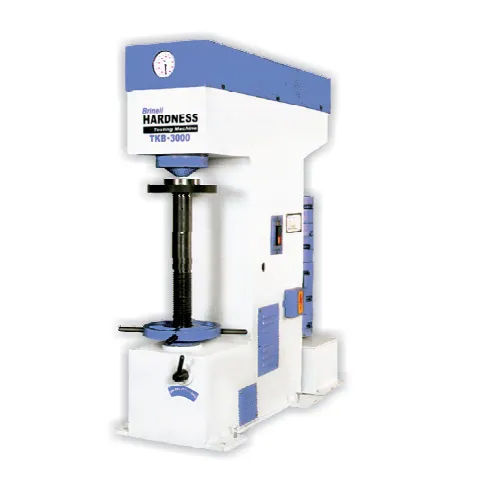
Tell us about your requirement

Price:
Quantity
Select Unit
- 50
- 100
- 200
- 250
- 500
- 1000+
Additional detail
Mobile number
Email

More Products in Hardness Testing Machine Category

Micro Hardeness Testing Machines
Minimum Order Quantity : 1 Unit
Mounting Type : Table Top
Test Width : 100 mm
Frequency : 50 Hz
Automation Grade : SemiAutomatic
Max Height : 45 mm specimen height
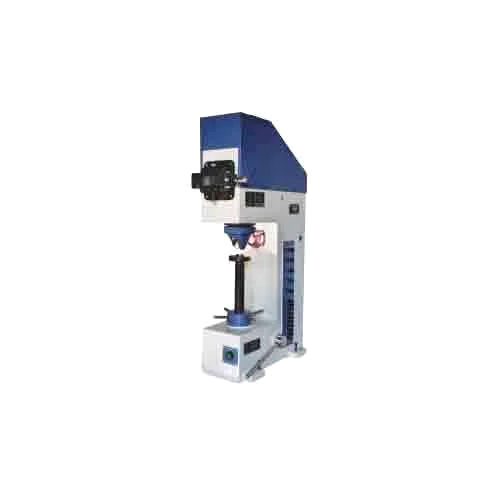
Vickers Hardness Tester
Minimum Order Quantity : 1 Unit
Mounting Type : Table Top
Test Width : Not Specified
Frequency : 50 Hz
Automation Grade : SemiAutomatic
Max Height : 200 mm
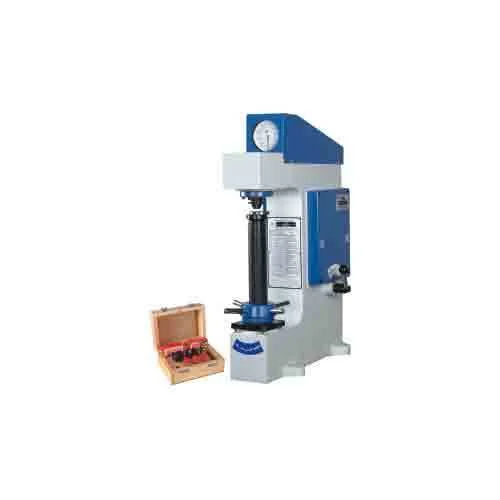
Rockwell Cum Brinell Hardness Tester
Minimum Order Quantity : 1 Unit
Mounting Type : BenchTop
Test Width : 150 mm (approx.)
Frequency : 50 Hz
Automation Grade : SemiAutomatic
Max Height : 230 mm (specimen height under indenter)

 Send Inquiry
Our Products
- Testing Machines
- Metallography Machines
- Mooney Viscometer
- Metallurgical Microscope
- Metallography Kit
- Garnet Sand
- Heat Treatment Furnace
- Submersible Agitator
- Escr Apparatus
- Oscillating Disc Rheometer
- Universal Testing Machines
- Hardness Testing Machine
- Rubber And Plastic Testing Equipment
- Laboratory Equipments
- Impact Testing Machine
- Moving Die Rheometer
- Coating Thickness Gauge
- Hot Air Oven
- Industrial Agitator
- Industrial Furnace
- Cast Iron Mould
- Hardenability Set Up
- Digital Brinell Microscope
- Humidity Chamber
- Grinding Polishing Machine
- Rebar Detection Meter
- Industrial Moulds


No Flat No. 4, Vidiansu Villa, Plot No. 73, Sangam Nagar Society, Pune Satara Road, Pune - 411037, Maharashtra, India

Mr Mahesh Deshpande
(Director)
Mobile :07313725949
 Send Inquiry
 Send SMS
Developed and Managed by Infocom Network Private Limited.
