Call us now :07313725949
 Send Inquiry
 Send Inquiry
High Precision Micro Hardeness Testing Machines
MOQ : 1 Unit
High Precision Micro Hardeness Testing Machines Specification
- Resolution
- 0.1 HV
- Application
- Metallurgical Laboratory, Material Research
- Features
- Semi-Automatic, Touch Panel Operation, Optical View
- Temperature
- 5C - 40C Celsius (oC)
- Equipment Type
- Micro Hardness Testing Machine
- Max Height
- 350 mm
- Operating Voltage
- 220V AC Volt (V)
- Power Supply
- Electric
- Test Range
- 10 - 1000 HV (Vickers hardness)
- Mounting Type
- Table-top
- Voltage
- As per required Volt (v)
- Specimen Size
- 1 mm to 30 mm thick Millimeter (mm)
- Operate Method
- Semi-Automatic
- Hardness
- Vickers & Knoop Micro Hardness
- Interface Type
- USB / RS232
- Accuracy
- 1.5% %
- Response Time
- 3 seconds Seconds
- Port Size
- Standard micro indenter port
- Humidity
- 10% - 90% RH
- Display Type
- Digital LCD
- Frequency
- 50 Hz Hertz (HZ)
- Number of Specimens
- Up to 20 per batch
- Product Type
- Hardeness Testing Machines
- Usage
- Industrial & Laboratory
- Automation Grade
- Semi-Automatic
- Machine Weight
- Approx. 45 Kg Kilograms (kg)
- Test Speed
- Variable, 0.5 - 2 mm/sec
- Test Width
- Up to 100 mm Millimeter (mm)
- Test Stroke
- 20 mm
- Control Mode
- Digital touch panel
- Load Range
- 10g to 1000g
- Sample Positioning
- Motorized XY stage
- Indenter Type
- Diamond
- Service Support
- Onsite installation & training
- Safety Feature
- Overload protection
- Standards Compliance
- ASTM E384, ISO 6507
- Calibration
- Auto and Manual
- Result Export
- PC connectivity, Excel/CSV format
- Lighting Type
- LED
- Optical Magnification
- 100x, 400x, 1000x
- Finish
- Powder coated, anti-corrosive
High Precision Micro Hardeness Testing Machines Trade Information
- Minimum Order Quantity
- 1 Unit
- Supply Ability
- 2 Units Per Week
- Delivery Time
- 8 Week
- Main Domestic Market
- All India
About High Precision Micro Hardeness Testing Machines
Micro Vickers Hardness Tester designed to cater heavy duty and research work with all the necessary automation for loading and measurements.
Test Load- 10gf to 1000 gf (0.098, 0.246, 0.49, 0.98, 1.96, 2.94, 4.9, 9.80 N) 10, 25, 50, 100,200, 300, 500, 1000 gmf dial switchable.
Dwell time - 5 - 60 Seconds.
Loading Mechanism Motorized loading and releasing.
Indexing- Rotating turret for indenter and objective lens.
Objective For scanning 10 x, Plan achromatic 0.25 NA.
For measurement 40 x, Plan achromatic 0.4 NA.
Diagonal Reading - Manual Filler micrometer eyepiece (10 X) with 0.5 Micron accuracy OR Digital measurement with the help of Digital Filler micrometer eyepiece (10 X) with 0.025 Micron accuracy.
Computerised Attachment: With this attachment one can convert manual hardness to computerized one. This has many advantages like higher accuracy as of bigger indentation, operator ease as one can get the Microhardness value by just clicking two diagonals of indentation image on the screens. Further one can get plot of effective case depth graph. All the readings with image and graphs can be stored, printed. This model MVH-II consists of
- 1/2" CCD Camera (High resolution monochrome) with interface adaptor
- Image grabber hardware.
- Dedicated image processing Software for Vickers Hardness number, effective case depth hardness graph. Hardness Conversion facility.
Superior Accuracy and Efficiency
The micro hardness tester provides exceptional precision, with 1.5 accuracy and a resolution of 0.1 HV, allowing for reliable measurements across a wide hardness range. Its semi-automatic mechanism and motorized XY stage ensure consistent test speed and positioning, making it ideal for frequent use in both industrial and laboratory settings.
Advanced Connectivity and Export Options
Designed for modern laboratories, the system enables seamless PC connectivity via USB or RS232 interfaces. Test data can be exported quickly in Excel or CSV format, facilitating archiving, analysis, and report generation. This ensures smooth integration with existing laboratory data workflows.
Robust Design with User-Friendly Features
Equipped with LED lighting and a durable powder-coated, anti-corrosive finish, the tester guarantees longevity and easy operation. Overload protection, variable test speeds, and digital touch panel controls provide a safe and intuitive user experience, while onsite installation and training support smooth onboarding.
FAQs of Micro Hardeness Testing Machines:
Q: How does the micro hardness testing process work with this machine?
A: The machine uses a diamond indenter to apply variable loads (10g1000g) onto the specimen, creating an indentation. The optical system magnifies the indents at 100x, 400x, or 1000x, allowing precise measurement of hardness values, which are automatically calculated, displayed, and exported for analysis.Q: What types of specimens and applications are suitable for this equipment?
A: This tester accommodates specimens from 1 mm to 30 mm thick and up to 20 per batch. It is ideal for metallurgical laboratories, material research, and industrial quality controlmeasuring Vickers and Knoop micro hardness on metals, alloys, and advanced materials.Q: When should auto or manual calibration be used?
A: Auto calibration is recommended for routine operation, ensuring consistent accuracy with minimal intervention. Manual calibration can be performed for verification after maintenance, or when testing uncommon materials, to optimize precision and reliability.Q: Where can the results from the tests be exported and analyzed?
A: All results are exportable via PC connectivity through USB or RS232 ports. Test data can be saved directly in Excel or CSV formats for further analysis and reporting, integrating easily into laboratory information management systems.Q: What are the benefits of the overload protection safety feature?
A: Overload protection prevents accidental damage to the indenter, sample, or internal mechanisms by monitoring applied forces and stopping operation if excessive loads are detected. This ensures operator safety and extends equipment lifespan.Q: How is sample positioning managed during testing?
A: Sample positioning is handled by a motorized XY stage, allowing precise and repeatable movement for each test point. This minimizes human error and optimizes throughput, especially when testing multiple specimens in a batch.Q: What support and service options are available for this machine?
A: Onsite installation and training are included, ensuring users understand operational procedures, calibration, and software features. Ongoing service support is available from the manufacturer, supplier, and exporter in India.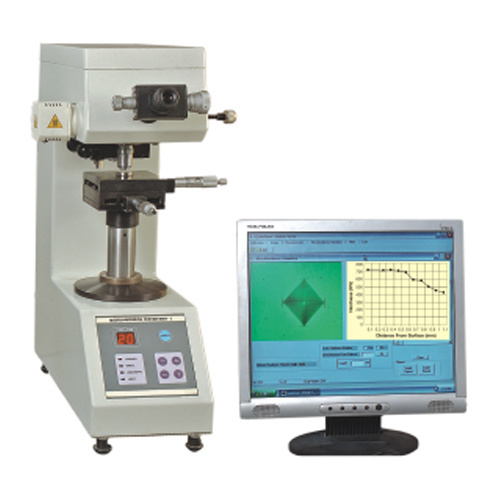
Tell us about your requirement

Price:
Quantity
Select Unit
- 50
- 100
- 200
- 250
- 500
- 1000+
Additional detail
Mobile number
Email

More Products in Testing Machines Category
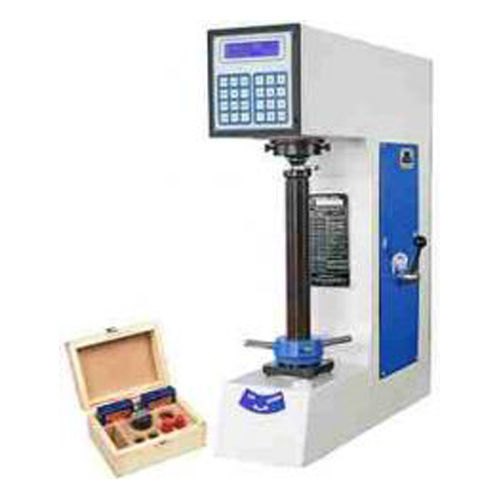
Rockwell Hardness Tester
Minimum Order Quantity : 1 Unit
Usage : Industrial & Laboratory
Product Type : Hardness Tester
Operate Method : SemiAutomatic
Power Supply : Electric
Voltage : As per required Volt (v)
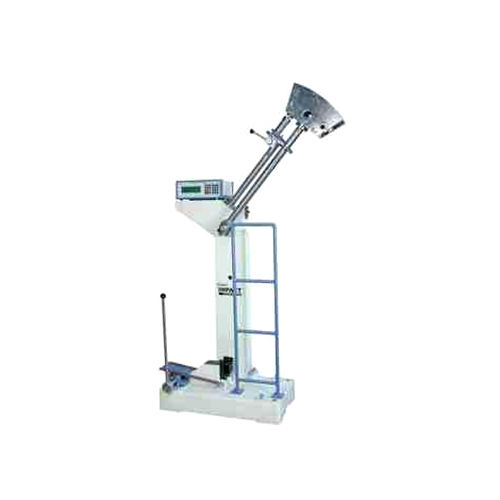
Impact Testing Machine
Minimum Order Quantity : 1 Unit
Usage : Industrial & Laboratory
Product Type : Impact Testing Machine
Operate Method : Automatic
Power Supply : Electric
Voltage : As required Volt (v)
Micro Hardness Tester
Minimum Order Quantity : 1 Unit
Usage : Industrial & Laboratory
Product Type : Hardness Tester
Operate Method : Automatic
Power Supply : Electric
Voltage : As required Volt (v)
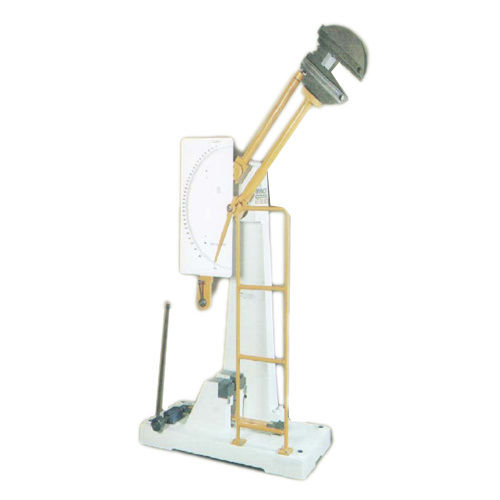
Charpy Impact Testing Machine
Minimum Order Quantity : 1 Unit
Usage : Industrial & Laboratory
Product Type : Charpy Impact Testing Machine
Operate Method : Manual
Power Supply : 220V/50Hz (other voltages as required)
Voltage : As required Volt (v)

 Send Inquiry
Our Products
- Testing Machines
- Metallography Machines
- Mooney Viscometer
- Metallurgical Microscope
- Metallography Kit
- Garnet Sand
- Heat Treatment Furnace
- Submersible Agitator
- Escr Apparatus
- Oscillating Disc Rheometer
- Universal Testing Machines
- Hardness Testing Machine
- Rubber And Plastic Testing Equipment
- Laboratory Equipments
- Impact Testing Machine
- Moving Die Rheometer
- Coating Thickness Gauge
- Hot Air Oven
- Industrial Agitator
- Industrial Furnace
- Cast Iron Mould
- Hardenability Set Up
- Digital Brinell Microscope
- Humidity Chamber
- Grinding Polishing Machine
- Rebar Detection Meter
- Industrial Moulds


No Flat No. 4, Vidiansu Villa, Plot No. 73, Sangam Nagar Society, Pune Satara Road, Pune - 411037, Maharashtra, India

Mr Mahesh Deshpande
(Director)
Mobile :07313725949
 Send Inquiry
 Send SMS
Developed and Managed by Infocom Network Private Limited.
