Call us now :07313725949
 Send Inquiry
 Send Inquiry
Environmental Stress Cracking Resistance Apparatus Testers
MOQ : 1 Unit
Environmental Stress Cracking Resistance Apparatus Testers Specification
- Temperature
- Room temperature to 60C
- Power Supply
- Electric
- Humidity
- 45%85% RH
- Display Type
- Digital
- Frequency
- 50/60 Hz
- Resolution
- 0.01 mm
- Accuracy
- 0.1 mm
- Operating Voltage
- As per required
- Usage
- Laboratory & Industrial
- Response Time
- 1 sec
- Operate Method
- Semi-Automatic
- Test Range
- Standard environmental stress cracking tests
- Number of Specimens
- Up to 10 specimens per batch
- Voltage
- As per required Volt (v)
- Mounting Type
- Table top
- Application
- Laboratory & Industrial
- Specimen Size
- 38 mm x 13 mm x 1.5 mm
- Automation Grade
- Semi-Automatic
- Max Height
- 350 mm
- Gas Pressure
- 0.10.5 MPa
- Port Size
- Standard 1/4 inch
- Interface Type
- Digital interface
- Features
- Robust, corrosion-resistant, energy-efficient
- Product Type
- Resistance Apparatus Testers
- Measuring Range
- 0100 mm displacement
- Capacity
- Up to 10 kN
- Machine Weight
- Approx. 40 kg
- Test Speed
- Adjustable up to 50 mm/min
- Test Width
- 50 mm
- Test Stroke
- 0100 mm
- Control Mode
- Semi-Automatic
- Solution Bath Volume
- 500 ml per specimen slot
- Compressor Compatibility
- Yes
- Compliance
- ASTM D1693, ISO 22088-3
- Timer Range
- 0-999 min
- Noise Level
- < 60 dB
- Safety Features
- Over-load protection, auto shut-off
- Sample Holder Material
- High-density polymer
- Dimensions
- 600 mm 400 mm 500 mm
- Ambient Operating Temperature
- 15C-40C
- Additional Product Specifications
- Test Chamber Material
- Stainless Steel
- Equipment Type
- Environmental Stress Cracking Resistance Apparatus
Environmental Stress Cracking Resistance Apparatus Testers Trade Information
- Minimum Order Quantity
- 1 Unit
- Payment Terms
- Cash Advance (CA), Cash in Advance (CID), Letter of Credit at Sight (Sight L/C), Telegraphic Transfer (T/T), Letter of Credit (L/C)
- Supply Ability
- 2 Units Per Month
- Delivery Time
- 6 Week
- Main Export Market(s)
- Asia, Australia, Central America, North America, South America, Eastern Europe, Western Europe, Middle East, Africa
- Main Domestic Market
- All India
About Environmental Stress Cracking Resistance Apparatus Testers
The Environmental Stress Crack Resistance (ESCR) Tester is an important tool in the plastic industry for evaluating the resistance of plastic materials to cracking under the influence of various environmental stresses.Precision Testing for Stress Crack Resistance
This apparatus delivers precise environmental stress cracking resistance tests for plastics in compliance with leading international standards. The adjustable test speed, digital display, and high-resolution measurement ensure repeatable and reliable data vital for material performance analysis.
Engineered for Durability and Safety
Built with a stainless steel chamber and high-density polymer sample holders, the tester offers corrosion-resistance and long-term reliability. Safety is enhanced through features such as over-load protection, auto shut-off, and energy-efficient design; making it suitable for robust laboratory and industrial environments.
User-Friendly Semi-Automatic Operation
The semi-automatic control mode, digital interface, and clear display provide straightforward operation for routine testing. With a timer range up to 999 minutes and capacity for up to 10 specimens per batch, it maximizes productivity and testing flexibility.
FAQs of Environmental Stress Cracking Resistance Apparatus Testers:
Q: How is the Environmental Stress Cracking Resistance test conducted with this apparatus?
A: The test involves placing plastic specimens in the apparatuss stainless steel test chamber, each submerged in a 500 ml solution bath per slot. Stress is applied using adjustable test speed and precise controls, with the process monitored digitally for accurate timing and measurements as per ASTM D1693 or ISO 22088-3.Q: What safety features are included in the ESCR Apparatus?
A: The tester is equipped with over-load protection and an auto shut-off mechanism, ensuring safe operation during prolonged tests. These features help prevent equipment damage and guarantee operator and specimen safety.Q: When is this apparatus typically used in testing workflows?
A: This apparatus is commonly used during quality control and material evaluation stages in both laboratory and industrial environments where assessing a materials resistance to environmental stress cracking is crucial.Q: Where can this tester be installed for optimal use?
A: Thanks to its tabletop, compact design (600 x 400 x 500 mm), the apparatus is ideal for bench installation in laboratories or on production floors. It requires access to electrical power, a standard 1/4 inch gas port, and can operate within ambient temperatures of 15C40C.Q: What are the benefits of using this specific environmental stress cracking resistance tester?
A: Benefits include high accuracy (0.1 mm), energy efficiency, easy-to-use digital display, capacity for up to 10 specimens, corrosion-resistant build, and compliance with key international standards. This makes it a reliable choice for repeatable and high-throughput testing.Q: How many specimens can be tested simultaneously, and what is the maximum capacity of the tester?
A: The apparatus is designed to accommodate up to 10 specimens per batch, each held securely in high-density polymer holders, with a maximum load capacity of 10 kN and test range of up to 100 mm displacement.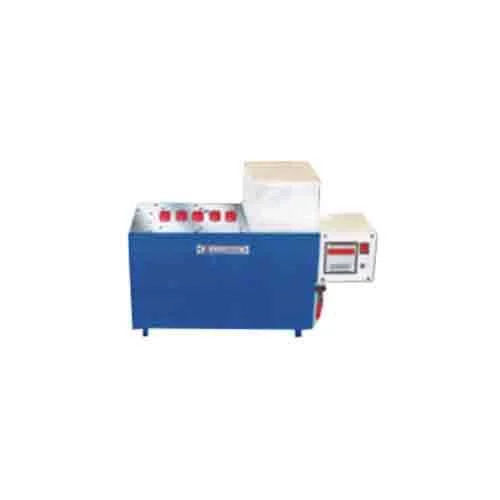
Tell us about your requirement

Price:
Quantity
Select Unit
- 50
- 100
- 200
- 250
- 500
- 1000+
Additional detail
Mobile number
Email

More Products in Rubber And Plastic Testing Equipment Category
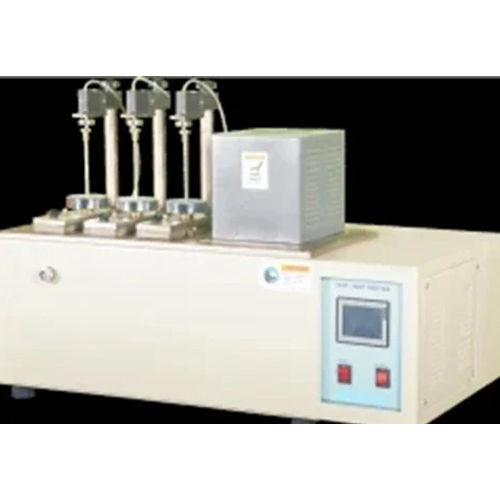
VSP And VHD Appartus
Price Range 50000.00 - 500000.00 INR / Unit
Minimum Order Quantity : 1 Unit
Voltage : As per required Volt (v)
Usage : Laboratory & Industrial
Product Type : VHD Appartus
Machine Weight : 32 kg
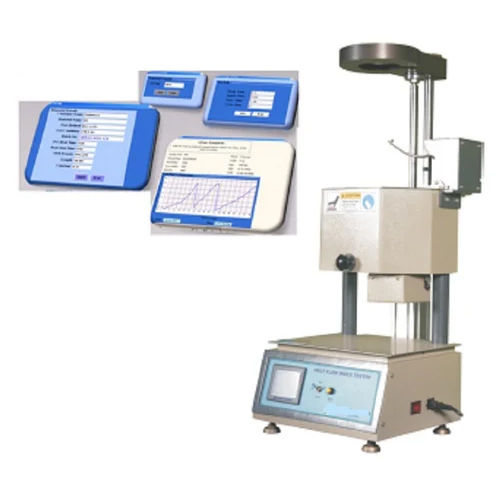
Melt Flow Index Tester
Price Range 50000.00 - 500000.00 INR / Unit
Minimum Order Quantity : 1 Unit
Voltage : As per required Volt (v)
Usage : Laboratory & Industrial
Product Type : Melt Flow Index Tester
Machine Weight : Approx. 40 Kg
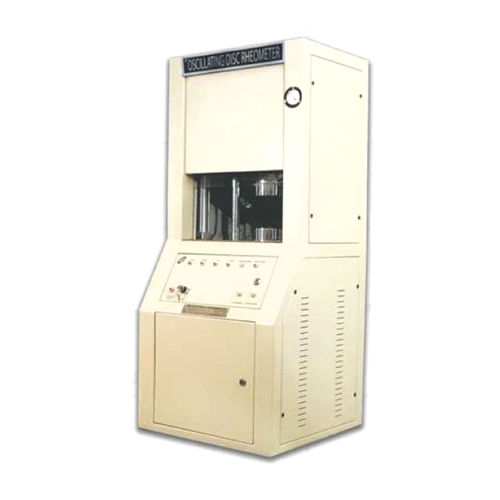
Oscillating Disc Rheometer
Price Range 100000.00 - 300000.00 INR / Unit
Minimum Order Quantity : 1 Unit
Voltage : As per required Volt (v)
Usage : Laboratory & Industrial , Rubber Testing
Product Type : Oscillating Rheometer

 Send Inquiry
Our Products
- Testing Machines
- Metallography Machines
- Mooney Viscometer
- Metallurgical Microscope
- Metallography Kit
- Garnet Sand
- Heat Treatment Furnace
- Submersible Agitator
- Escr Apparatus
- Oscillating Disc Rheometer
- Universal Testing Machines
- Hardness Testing Machine
- Rubber And Plastic Testing Equipment
- Laboratory Equipments
- Impact Testing Machine
- Moving Die Rheometer
- Coating Thickness Gauge
- Hot Air Oven
- Industrial Agitator
- Industrial Furnace
- Cast Iron Mould
- Hardenability Set Up
- Digital Brinell Microscope
- Humidity Chamber
- Grinding Polishing Machine
- Rebar Detection Meter
- Industrial Moulds


No Flat No. 4, Vidiansu Villa, Plot No. 73, Sangam Nagar Society, Pune Satara Road, Pune - 411037, Maharashtra, India

Mr Mahesh Deshpande
(Director)
Mobile :07313725949
 Send Inquiry
 Send SMS
Developed and Managed by Infocom Network Private Limited.
