Call us now :07313725949
 Send Inquiry
 Send Inquiry
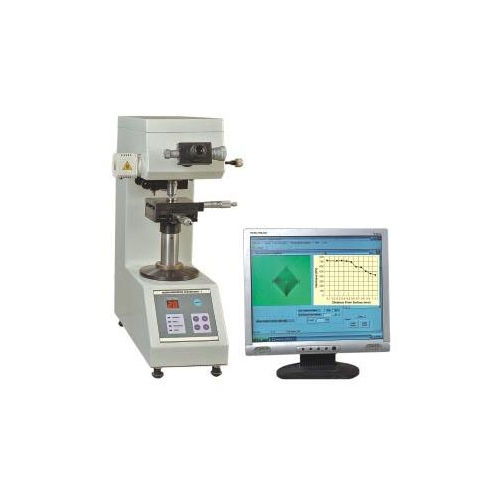
Rockwell Hardness Tester Analog
MOQ : 1 Unit
Rockwell Hardness Tester Analog Specification
- Response Time
- Immediate
- Automation Grade
- Manual
- Power Supply
- Electric
- Equipment Type
- Rockwell Hardness Tester
- Product Type
- Hardness Tester
- Mounting Type
- Bench-top
- Voltage
- As per required Volt (v)
- Hardness
- Rockwell Scale
- Operating Voltage
- As per required
- Frequency
- 50 Hz
- Max Height
- 150 mm Specimen
- Application
- Metal Hardness Testing
- Interface Type
- Manual Lever
- Specimen Size
- Up to 150 mm Height
- Measuring Range
- 20-100 HRC / 10-70 HRB / 60-100 HRF
- Resolution
- 0.5 HRC
- Humidity
- 10-80% RH
- Color
- White & Blue
- Number of Specimens
- Single at a Time
- Temperature
- 0C to 40C
- Test Range
- 20-100 HRC
- Accuracy
- 1 HRC
- Usage
- Laboratory and Industrial
- Capacity
- 250 kgf (Maximum Load)
- Machine Weight
- 65 kg
- Test Speed
- Manual Operation
- Test Width
- 150 mm
- Test Stroke
- 150 mm
- Preload
- 10 kgf
- Body Material
- Cast Iron
- Indenter Type
- Diamond Cone / Steel Ball
- Safety
- Overload Protection
- Finish
- Powder Coated
- Time to Display Result
- <30 sec
- Support Accessories
- Standard Test Blocks, Indenter, Manual
- Test Force
- 60, 100, 150 kgf (Selectable)
- Calibration
- Factory Calibrated with Certificate
Rockwell Hardness Tester Analog Trade Information
- Minimum Order Quantity
- 1 Unit
- Payment Terms
- Cash Advance (CA), Cash in Advance (CID), Telegraphic Transfer (T/T), Letter of Credit (L/C)
- Supply Ability
- 10 Units Per Week
- Delivery Time
- 6 Week
- Main Export Market(s)
- Asia, Australia, Central America, North America, South America, Eastern Europe, Western Europe, Middle East, Africa
- Main Domestic Market
- All India
About Rockwell Hardness Tester Analog
These models strictly conforms to IS: 1586-2000, BS: 891 part 1 & 2 for Rockwell & Rockwell superficial test. IS: 2281-1983, ASTM-E-10 for brinell test.
Rockwell System
Automatic weight selection with automatic zero setting dial gauge.
Automatic weight selection with automatic zero setting dial gauge with more testing height and throat
Rockwell cum Brinell Combined System
Automatic weight selection with automatic zero setting dial gauge.
Arrangement similar to RS with two additional weights of 185.5 kgf and 250 kgf for brinell tests.
On this machinesmall pin having Dia 2 mm can be tested as plunger is guided with a set of six bearings.
Rockwell cum Rockwell Superficial Combined
This hardness tester is similar above machine in construction, and with automatic weight selection. This is useful for carrying Rockwell and Rockwell Superficial tests. The Rockwell Superficial method is useful for checking hardness of very thin sheets and surface hardness.
Motorized Hardness Tester models are also available in the above models.
Application and removal of major load is motorized. Motorized models have semi automatic operations for products testing. Drive motor-single phase, 230-V, 50 cycles AC
Precision Hardness Testing for Metals
Equipped with selectable test forces and dual indenter options, this Rockwell Hardness Tester delivers reliable and repeatable measurements for a wide range of metal specimens. Its manual operation and robust cast iron construction make it highly suitable for quality control and research applications, ensuring dependable performance even in demanding industrial environments.
Versatility in Application and Operation
Designed to accommodate specimen heights up to 150 mm and the heaviest loads of 250 kgf, the tester covers an extensive hardness measuring range for various materials. Its selectable forces and quick result display optimize workflow in both laboratory and manufacturing setups, while manual lever operation ensures straightforward usage for technicians.
Certified Quality and Safety Assurance
Compliance with ASTM E18 guarantees industry-standard accuracy, while factory calibration with certificate assures measurement fidelity. The tester is equipped with overload protection and covered in a powder-coated finish, offering both operational safety and longevity. It supports standard accessories, making maintenance and calibration convenient for users.
FAQs of Rockwell Hardness Tester Analog:
Q: How does the Rockwell Hardness Tester Analog operate?
A: The device operates using a manual lever to control the indenter, which applies a selectable test force (60, 100, or 150 kgf) onto the metal specimen. The tester offers immediate hardness readings, with results displayed within 30 seconds.Q: What types of specimens can be tested with this equipment?
A: You can test single metal specimens at a time, up to 150 mm in height and a maximum load capacity of 250 kgf. The tester accommodates a wide variety of metals for hardness measurement.Q: When is calibration required for the Rockwell Hardness Tester Analog?
A: The equipment is factory calibrated and delivered with a calibration certificate. Periodic calibration is recommended, especially after extensive use or significant mechanical impact, to maintain accuracy.Q: Where is this hardness tester typically used?
A: This model is primarily used in laboratories, manufacturing units, and industrial quality control departments for hardness testing of metals, benefiting sectors such as automotive, metallurgy, export, and manufacturing industries.Q: What is the process for conducting a hardness test with this device?
A: Place the metal specimen on the testing platform, set the desired test force and indenter type, engage the pre-load, and operate the manual lever. The machine then measures and displays hardness on the Rockwell scale within 30 seconds.Q: Which accessories are supported for operation and maintenance?
A: Standard test blocks, diamond cone and steel ball indenters, a manual, and calibration certificate are provided with the equipment, facilitating operation, maintenance, and verification of accuracy.Q: What are the benefits of using this Rockwell Hardness Tester Analog?
A: Key benefits include fast and accurate hardness measurements, user-friendly manual operation, overload safety protection, compliance with ASTM E18, reliable calibration, and robust construction for long-term durability in both laboratory and industrial environments.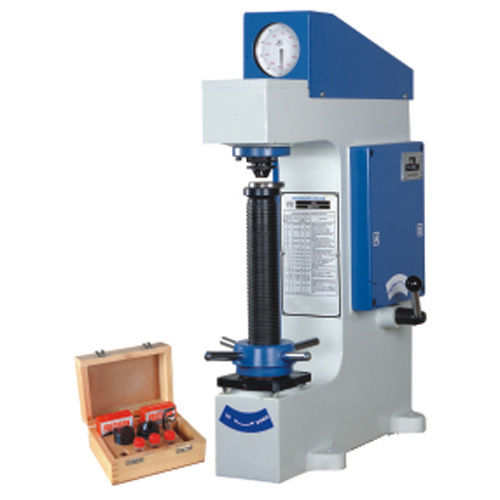
Tell us about your requirement

Price:
Quantity
Select Unit
- 50
- 100
- 200
- 250
- 500
- 1000+
Additional detail
Mobile number
Email

More Products in Testing Machines Category
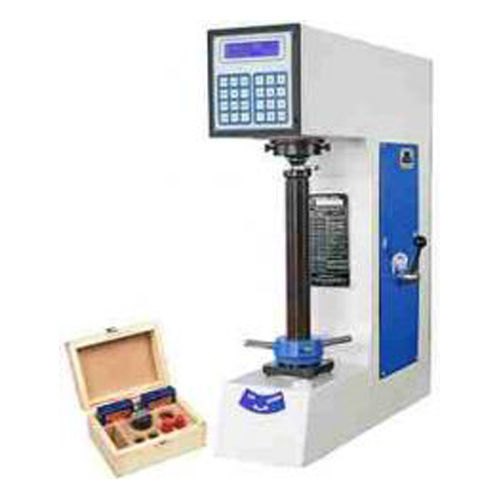
Rockwell Hardness Tester
Minimum Order Quantity : 1 Unit
Voltage : As per required Volt (v)
Power Supply : Electric
Test Stroke : 50 mm
Control Mode : SemiAutomatic
Usage : Industrial & Laboratory
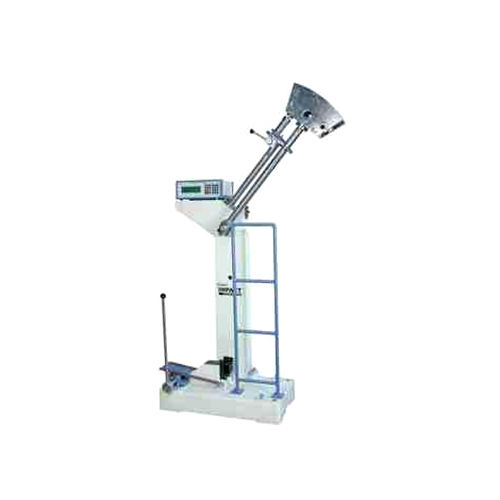
Impact Testing Machine
Minimum Order Quantity : 1 Unit
Voltage : As required Volt (v)
Power Supply : Electric
Test Stroke : 300 mm
Control Mode : Automatic
Usage : Industrial & Laboratory
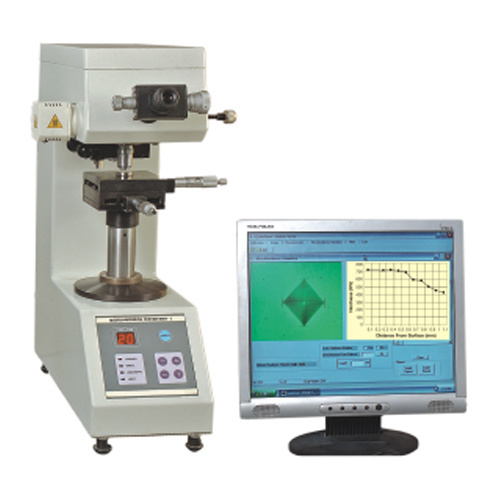
High Precision Micro Hardeness Testing Machines
Minimum Order Quantity : 1 Unit
Voltage : As per required Volt (v)
Power Supply : Electric
Test Stroke : 20 mm
Control Mode : Digital touch panel
Usage : Industrial & Laboratory
Micro Hardness Tester
Minimum Order Quantity : 1 Unit
Voltage : As required Volt (v)
Power Supply : Electric
Test Stroke : 25 mm
Control Mode : Automatic (MicroprocessorBased)
Usage : Industrial & Laboratory

 Send Inquiry
Our Products
- Testing Machines
- Metallography Machines
- Mooney Viscometer
- Metallurgical Microscope
- Metallography Kit
- Garnet Sand
- Heat Treatment Furnace
- Submersible Agitator
- Escr Apparatus
- Oscillating Disc Rheometer
- Universal Testing Machines
- Hardness Testing Machine
- Rubber And Plastic Testing Equipment
- Laboratory Equipments
- Impact Testing Machine
- Moving Die Rheometer
- Coating Thickness Gauge
- Hot Air Oven
- Industrial Agitator
- Industrial Furnace
- Cast Iron Mould
- Hardenability Set Up
- Digital Brinell Microscope
- Humidity Chamber
- Grinding Polishing Machine
- Rebar Detection Meter
- Industrial Moulds


No Flat No. 4, Vidiansu Villa, Plot No. 73, Sangam Nagar Society, Pune Satara Road, Pune - 411037, Maharashtra, India

Mr Mahesh Deshpande
(Director)
Mobile :07313725949
 Send Inquiry
 Send SMS
 Call Me Free
Developed and Managed by Infocom Network Private Limited.
