Call us now :07313725949
 Send Inquiry
 Send Inquiry
Rockwell Hardness Tester
MOQ : 1 Unit
Rockwell Hardness Tester Specification
- Mounting Type
- Table Top
- Test Range
- 20 - 100 HRA/HRB/HRC
- Resolution
- 0.5 HRC
- Product Type
- Hardness Tester
- Application
- Measurement of metallic material hardness
- Temperature
- 10C ~ 35C
- Operate Method
- Semi-Automatic
- Specimen Size
- Up to 230 mm height
- Equipment Type
- Rockwell Hardness Tester
- Usage
- Industrial & Laboratory
- Number of Specimens
- Single Specimen
- Automation Grade
- Semi-Automatic
- Features
- High Accuracy, Robust Construction, Easy Operation
- Hardness
- Rockwell A, B, C scales
- Measuring Range
- 20 100 HRC/HRB/HRA
- Voltage
- As per required Volt (v)
- Accuracy
- 1.5 HRC
- Frequency
- 50 Hz
- Power Supply
- Electric
- Humidity
- 85% RH
- Port Size
- Standard
- Max Height
- 230 mm workpiece
- Operating Voltage
- 220V AC, 50 Hz
- Interface Type
- Manual/Mechanical
- Response Time
- Immediate (Mechanical)
- Capacity
- 150 kgf max
- Machine Weight
- 80 kg
- Test Speed
- 0.5 mm/sec
- Test Width
- 150 mm
- Test Stroke
- 50 mm
- Control Mode
- Semi-Automatic
- Finish
- Powder Coated
- Calibration
- Supplied with Standard Test Block
- Test Load
- 60, 100, 150 kgf
- Standards Compliance
- IS 1586 / ASTM E18
- Main Body Material
- Cast Iron
- Indication
- Mechanical Dial Gauge
- Indenter Type
- Diamond & Steel Ball
- Dimensions
- 500 x 250 x 700 mm
- Safety
- Overload Protection
Rockwell Hardness Tester Trade Information
- Minimum Order Quantity
- 1 Unit
- Payment Terms
- Cash Advance (CA), Cash in Advance (CID), Letter of Credit at Sight (Sight L/C), Telegraphic Transfer (T/T), Letter of Credit (L/C)
- Supply Ability
- 2 Units Per Month
- Delivery Time
- 6 Week
- Main Export Market(s)
- Asia, Australia, Central America, North America, South America, Eastern Europe, Western Europe, Middle East, Africa
- Main Domestic Market
- All India
About Rockwell Hardness Tester
Motorized system for application and removal of major load
Minor load setting by LED bar graph
Keyboard entry for scale selection
Hi-Low-OK indication for hardness value
Easy to read, large size extra bright 7 segment display
Centronics parallel port for connecting Dot Matrix Pinter
Sufficient error codes for smooth functioning of machines
Serial interface (Optional)
Least Count 01 for Rockwell and 0.2 for Rockwell Superficial
Dwell Time 1 to 99 Seconds
. Scale Displayed A,B,C,D,E,F,G,H,K,L,M,N,P,R,S,V in Nos. 1 to 15 Resp. and 15N,30N,45N,15 T,30T,45T in Nos. 1 to 21 Resp. for Superficial
Indenter is guided in linear bearing facilitates to test small jobs
High Accuracy & Reliable Performance
Engineered for precise measurement, the Rockwell Hardness Tester features a mechanical dial gauge with a measuring range of 20100 HRC/HRB/HRA and a resolution of 0.5 HRC. Its accuracy of 1.5 HRC and immediate response time are achieved through high-quality calibration using standard test blocks supplied with the unit.
Durable Construction & Safety
Constructed from robust cast iron and finished with powder coating, this tester is built to last in demanding environments. Overload protection ensures safe operation, while its semi-automatic control makes handling straightforward for industrial and laboratory professionals.
Versatile Application
Designed for the measurement of metallic material hardness, the tester supports various indenter types and accommodates specimens up to 230 mm in height. Its user-friendly interface and table-top mounting make it suitable for a range of testing needs in workshops and research labs.
FAQs of Rockwell Hardness Tester:
Q: How does the Rockwell Hardness Tester ensure measurement accuracy?
A: The Rockwell Hardness Tester achieves high accuracy (1.5 HRC) by calibrating each unit with a standard test block. Its mechanical dial gauge enables precise readings with a resolution of 0.5 HRC, supporting reliable industrial and laboratory testing.Q: What types of indenters can be used with this machine?
A: This tester supports both diamond and steel ball indenters, allowing measurement on various metallic materials according to Rockwell A, B, and C scales.Q: When should the test blocks be used for calibration?
A: Standard test blocks should be used during initial setup, routine verification, and whenever recalibration is required, ensuring consistent compliance with IS 1586 / ASTM E18 standards.Q: Where can this hardness tester be applied?
A: Due to its robust build and semi-automatic operation, the Rockwell Hardness Tester is ideal for industrial and laboratory environments including manufacturing plants, research facilities, and metal testing laboratories.Q: What is the process for operating the Rockwell Hardness Tester?
A: To operate, place a single specimen (up to 230 mm height) on the stage, select the required indenter and test load, set the control mode to semi-automatic, and initiate the test. Immediate hardness readings are displayed on the mechanical dial gauge.Q: How does overload protection benefit the user?
A: Overload protection prevents mechanical damage and enhances user safety by automatically restricting load application beyond maximum capacity during operation.Q: What are the mounting and installation requirements?
A: This equipment is designed for table-top mounting and operates on 220V AC, 50 Hz. It should be installed in a clean environment maintaining humidity 85%% RH and temperature between 10C and 35C for optimal performance.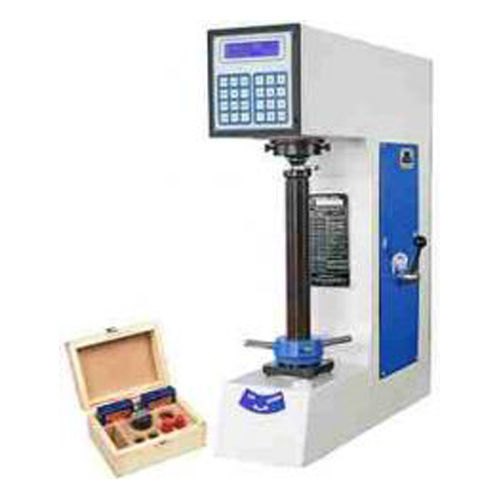
Tell us about your requirement

Price:
Quantity
Select Unit
- 50
- 100
- 200
- 250
- 500
- 1000+
Additional detail
Mobile number
Email

More Products in Testing Machines Category

Compression Testing Machine
Price Range 50000.00 - 1000000.00 INR / Unit
Minimum Order Quantity : 1 Unit
Voltage : As per required Volt (v)
Power Supply : Electric
Product Type : Testing Machine
Usage : Industrial & Laboratory
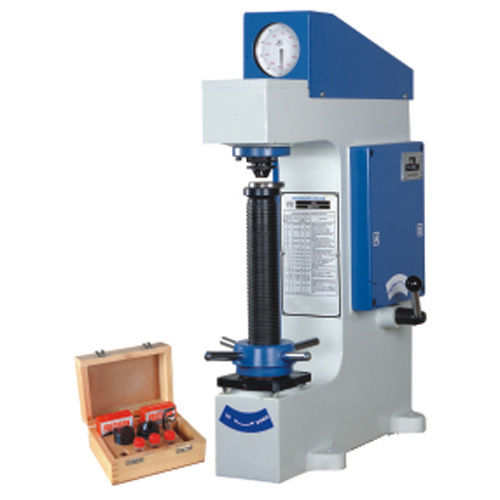
Rockwell Hardness Tester Analog
Price Range 50000.00 - 200000.00 INR / Unit
Minimum Order Quantity : 1 Unit
Voltage : As per required Volt (v)
Power Supply : Electric
Product Type : Hardness Tester
Usage : Laboratory and Industrial
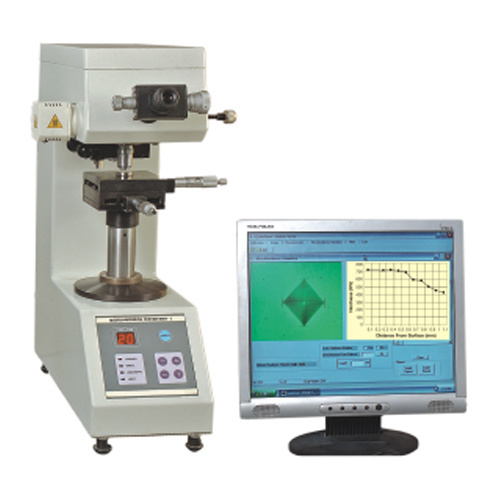
High Precision Micro Hardeness Testing Machines
Minimum Order Quantity : 1 Unit
Voltage : As per required Volt (v)
Power Supply : Electric
Product Type : Hardeness Testing Machines
Usage : Industrial & Laboratory
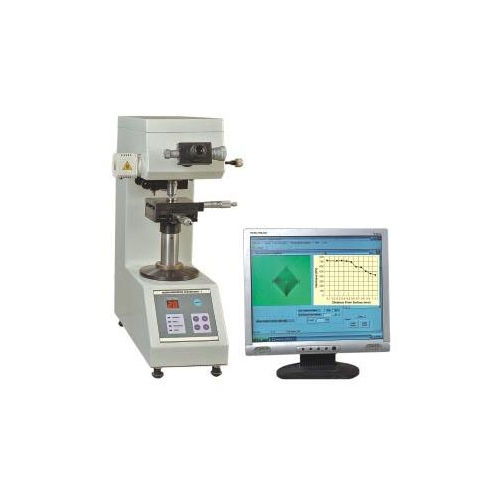
Micro Hardness Tester
Minimum Order Quantity : 1 Unit
Voltage : As required Volt (v)
Power Supply : Electric
Product Type : Hardness Tester
Usage : Industrial & Laboratory

 Send Inquiry
Our Products
- Testing Machines
- Metallography Machines
- Mooney Viscometer
- Metallurgical Microscope
- Metallography Kit
- Garnet Sand
- Heat Treatment Furnace
- Submersible Agitator
- Escr Apparatus
- Oscillating Disc Rheometer
- Universal Testing Machines
- Hardness Testing Machine
- Rubber And Plastic Testing Equipment
- Laboratory Equipments
- Impact Testing Machine
- Moving Die Rheometer
- Coating Thickness Gauge
- Hot Air Oven
- Industrial Agitator
- Industrial Furnace
- Cast Iron Mould
- Hardenability Set Up
- Digital Brinell Microscope
- Humidity Chamber
- Grinding Polishing Machine
- Rebar Detection Meter
- Industrial Moulds


No Flat No. 4, Vidiansu Villa, Plot No. 73, Sangam Nagar Society, Pune Satara Road, Pune - 411037, Maharashtra, India

Mr Mahesh Deshpande
(Director)
Mobile :07313725949
 Send Inquiry
 Send SMS
Developed and Managed by Infocom Network Private Limited.
